

Hey there! As a balloon pump supplier, I often get asked about the airflow rate of balloon pumps. It's a crucial factor that can make or break your balloon - inflating experience, whether you're a party planner, a DIY enthusiast, or just someone looking to add some fun to an event. So, let's dive right in and explore what the airflow rate of a balloon pump really means.
What is Airflow Rate?
First things first, let's understand what airflow rate is. Simply put, airflow rate is the volume of air that a pump can move in a given amount of time. It's usually measured in cubic feet per minute (CFM) or liters per minute (LPM). A higher airflow rate means the pump can fill a balloon faster.
Imagine you're throwing a big party, and you've got hundreds of balloons to inflate. You don't want to be there all day pumping each balloon by hand or using a slow - moving pump. That's where a balloon pump with a good airflow rate comes in handy. It can significantly cut down the time you spend on inflating balloons, leaving you more time to focus on other aspects of the party.
Factors Affecting Airflow Rate
There are several factors that can affect the airflow rate of a balloon pump.
Pump Design: The design of the pump plays a huge role. For example, a piston - type pump and a diaphragm - type pump have different airflow characteristics. Piston pumps generally have a higher initial airflow rate as they can displace a large volume of air with each stroke. Diaphragm pumps, on the other hand, are often more compact and can provide a more consistent airflow over time.
Motor Power: The power of the motor in an electric balloon pump is directly related to its airflow rate. A more powerful motor can drive the pumping mechanism faster, resulting in a higher volume of air being moved per minute. However, more power also usually means higher energy consumption and potentially more noise.
Hose and Nozzle Size: The size of the hose and nozzle attached to the pump can also impact the airflow rate. A wider hose allows more air to flow through, while a smaller nozzle can increase the pressure of the air being released into the balloon. Finding the right balance between hose and nozzle size is important for optimal inflation.
Different Types of Balloon Pumps and Their Airflow Rates
Let's take a look at some common types of balloon pumps and their typical airflow rates.
Hand - Operated Balloon Pumps: These are the most basic type of balloon pumps. They're simple, inexpensive, and don't require any power source other than your own muscle power. However, their airflow rate is relatively low. On average, a hand - operated balloon pump can have an airflow rate of around 10 - 20 LPM. This means it will take a bit of time to inflate larger balloons, but they're great for small - scale projects or when you don't have access to electricity.
Electric Balloon Pumps: Electric pumps are a popular choice for both home and professional use. They come in various sizes and power levels. A standard electric balloon pump can have an airflow rate ranging from 50 - 150 LPM. This makes them much faster at inflating balloons compared to hand - operated pumps. If you're planning a large event, an electric pump can save you a ton of time. Check out our Multifunctional Balloon Pump for a great option with a decent airflow rate.
Mini Air Pumps: Mini air pumps are compact and portable. They're perfect for on - the - go use, like at outdoor events or when you need to inflate balloons in a tight space. Our Rechargeable Mini Air Pump has an airflow rate that's usually in the range of 30 - 80 LPM. Despite their small size, they can still get the job done relatively quickly.
Heavy - Duty Air Pumps: For professional balloon decorators or large - scale event organizers, heavy - duty air pumps are the way to go. These pumps can have an airflow rate of 200 LPM or more. They're designed to handle continuous use and can inflate multiple balloons simultaneously. Our Air Pump is a great example of a heavy - duty option that can meet the demands of even the busiest event planners.
How to Choose the Right Airflow Rate for Your Needs
When choosing a balloon pump, it's important to consider your specific needs.
Event Size: If you're just inflating a few balloons for a small family gathering, a hand - operated pump or a mini electric pump with a lower airflow rate will be sufficient. But for a large corporate event or a big birthday party with hundreds of balloons, you'll want a pump with a higher airflow rate, like a heavy - duty electric pump.
Balloon Size: Larger balloons require more air to inflate, so you'll need a pump with a higher airflow rate. Smaller balloons can be inflated with a lower - airflow pump.
Time Constraints: If you're short on time, a pump with a high airflow rate is essential. You don't want to be stuck inflating balloons for hours when you could be doing other things.
Measuring Airflow Rate
If you're curious about the exact airflow rate of a balloon pump, there are a few ways to measure it. You can use an airflow meter, which is a specialized device that measures the volume of air flowing through a given point. However, these meters can be quite expensive and may not be practical for home use.
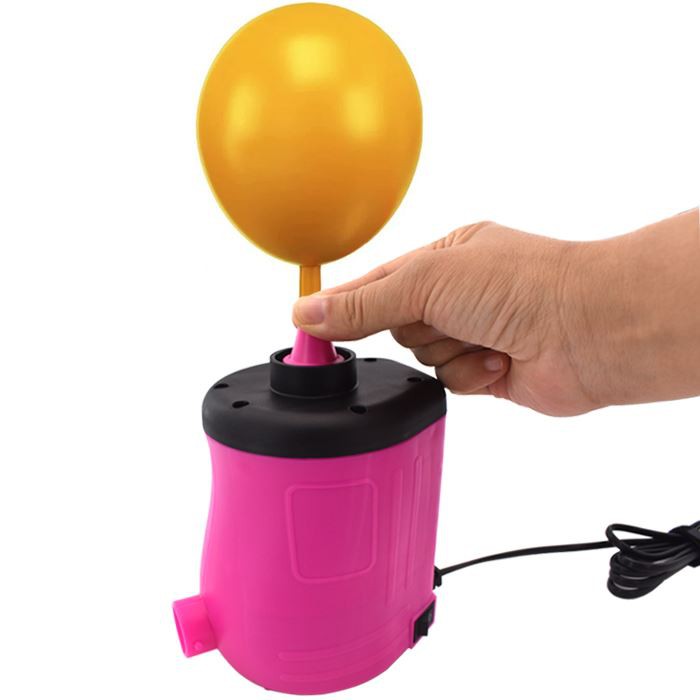

Another way is to do a simple test. Fill a balloon with the pump and time how long it takes. Then, measure the volume of the fully - inflated balloon. You can estimate the airflow rate by dividing the volume of the balloon by the time it took to inflate it. This method isn't as accurate as using an airflow meter, but it can give you a rough idea of the pump's performance.
Our Balloon Pump Range
As a balloon pump supplier, we offer a wide range of pumps to suit different needs and budgets. Our Multifunctional Balloon Pump is a great all - around option. It's versatile, easy to use, and has a decent airflow rate. The Air Pump is our heavy - duty model, perfect for professional use. And if you're looking for something portable, our Rechargeable Mini Air Pump is a great choice.
Conclusion
The airflow rate of a balloon pump is an important factor to consider when choosing the right pump for your needs. Whether you're inflating balloons for a small party or a large event, understanding how airflow rate works and what affects it can help you make an informed decision.
If you're interested in purchasing a balloon pump or have any questions about our products, we'd love to hear from you. Contact us to start a procurement discussion, and let us help you find the perfect balloon pump for your next event.
References
- "Pump Handbook" by Igor J. Karassik
- "Fluid Mechanics and Thermodynamics of Turbomachinery" by S. L. Dixon