

Do hand balloon pumps work in cold weather?
As a supplier of hand balloon pumps, I've received numerous inquiries from customers about the performance of our products in cold weather. This is a crucial question, especially for those who plan outdoor events during the colder months or operate in regions with frigid climates. In this blog, I'll delve into the science behind how cold weather affects hand balloon pumps and provide insights based on our experience and research.
The Science of Cold Weather and Air Compression
To understand how cold weather impacts hand balloon pumps, we need to grasp the basic principles of air compression. Hand balloon pumps work by drawing in air and then forcing it into the balloon. This process is fundamentally about compressing air. The relationship between temperature, pressure, and volume is described by the ideal gas law, which states that PV = nRT, where P is pressure, V is volume, n is the number of moles of gas, R is the ideal gas constant, and T is temperature in Kelvin.
When the temperature drops, as it does in cold weather, the air molecules move more slowly and have less kinetic energy. According to the ideal gas law, for a fixed amount of air (n is constant) and a pump chamber of a fixed volume (V is constant), a decrease in temperature (T) will result in a decrease in pressure (P). This means that the air inside the pump chamber becomes denser and more difficult to compress.
Impact on Hand Pump Performance
The reduced temperature affects the two main types of hand balloon pumps in different ways:
Single - action pumps
Single - action pumps draw in air on one stroke and expel it into the balloon on the next. In cold weather, the decreased pressure inside the pump chamber makes it harder to draw in air. The pump has to work against the denser air, which requires more effort from the user. As a result, the pumping speed is significantly reduced, and it may take longer to inflate a balloon.
Double - action pumps
Double - action pumps are designed to draw in and expel air on both the up - and down - strokes. While they are more efficient than single - action pumps in normal conditions, cold weather also poses challenges. The increased density of the air can lead to a decrease in the amount of air that can be drawn in during each stroke. Additionally, the seals and moving parts of the pump may experience increased friction due to the cold, which further reduces the efficiency of the pump.
Material Considerations
The materials used in hand balloon pumps also play a crucial role in their performance in cold weather.
Plastic pumps
Plastic Manual Balloon Pump are a popular choice due to their affordability and lightweight nature. However, plastic becomes more brittle in cold temperatures. This can lead to cracks or breaks in the pump, especially if it is subjected to stress during the pumping process. Cracks in the pump can cause air leaks, making it difficult to maintain the necessary pressure to inflate the balloons.
Metal pumps
Metal pumps are generally more durable in cold weather compared to plastic ones. They are less likely to become brittle and can withstand the physical stress of pumping in low - temperature conditions. However, metal can conduct cold, which may cause the pump to feel cold to the touch and make it less comfortable to use for extended periods.
Tips for Using Hand Balloon Pumps in Cold Weather
Despite the challenges, there are several ways to ensure that hand balloon pumps work effectively in cold weather:
- Warm up the pump: Before using the pump, hold it in your hands for a few minutes to warm it up slightly. This can help reduce the brittleness of plastic parts and make the air inside the pump chamber easier to compress.
- Use proper technique: Pump slowly and steadily to avoid putting too much stress on the pump. This can help prevent air leaks and ensure a consistent flow of air into the balloon.
- Keep the pump dry: Moisture can freeze in cold weather, which can damage the pump. Make sure the pump is dry before using it, and store it in a dry place when not in use.
Our Product Solutions
At our company, we understand the importance of having reliable hand balloon pumps, even in cold weather. We offer a range of high - quality pumps, including Portable Hand Balloon Air Inflator and Double Action Balloon Pump. Our pumps are designed with durable materials and advanced engineering to withstand a wide range of temperatures.

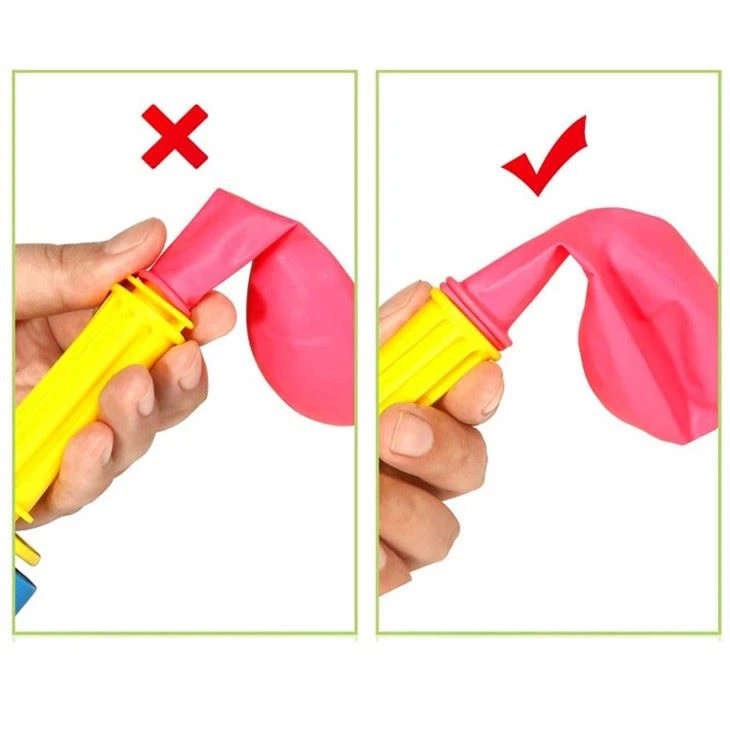
Our double - action pumps are particularly well - suited for cold weather use. They are constructed with high - quality seals and moving parts that are resistant to the effects of cold and friction. Additionally, our plastic pumps are made from a special type of plastic that is more flexible in cold temperatures, reducing the risk of cracking.
Conclusion
In conclusion, hand balloon pumps can work in cold weather, but their performance may be affected by the decrease in temperature and the properties of the materials used. By understanding the scientific principles behind air compression and following the tips mentioned above, users can overcome these challenges and ensure that their balloons are inflated efficiently.
If you're in the market for a hand balloon pump that can perform well in cold weather, we invite you to explore our product range. We are committed to providing high - quality products and excellent customer service. Contact us to discuss your specific needs and requirements, and let us help you find the perfect hand balloon pump for your next event.
References
- Halliday, D., Resnick, R., & Walker, J. (2014). Fundamentals of Physics. Wiley.
- Van Ness, H. C. (1969). Understanding Thermodynamics. Dover Publications.